Plovdiv is both one of Bulgaria’s youngest cities, with several universities and tens of thousands of students, and also its (and possibly Europe’s) oldest city. You don’t have to search too long at the tourist office to find a brochure proclaiming Plovdiv to be no less than the continent’s longest-running, continuously-inhabited city. Indeed, there’s been people (and presumably culture) here for something like 5,000 years, all the way back to the ancient Thracians.
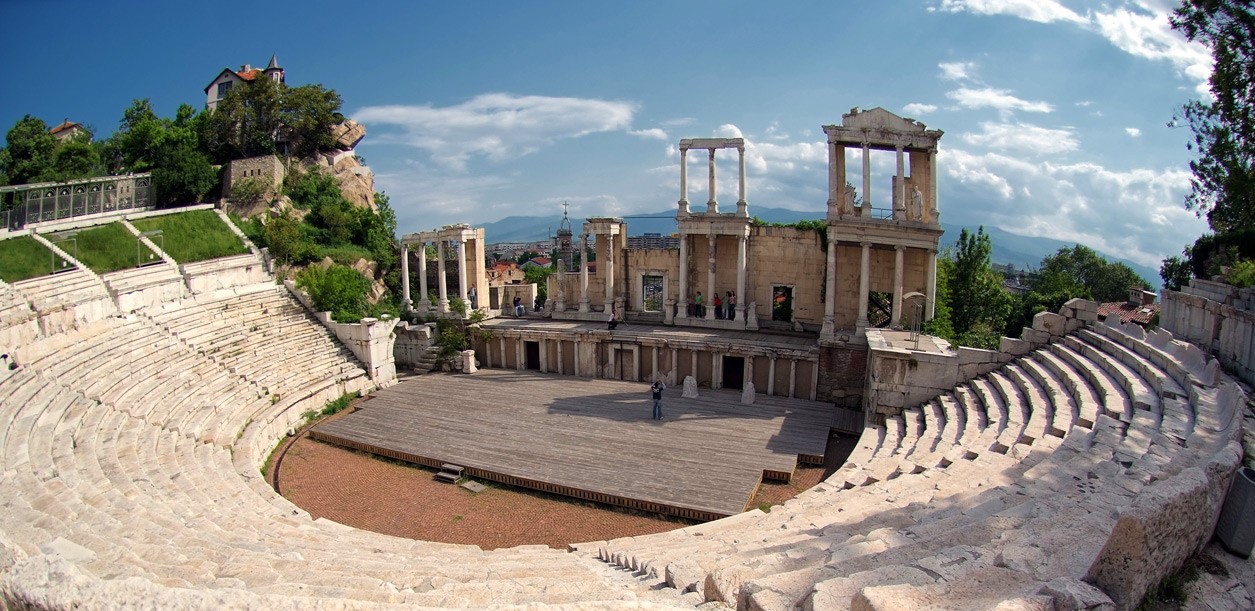
And unlike Bulgaria’s modern capital, Sofia, Plovdiv didn’t have to dig around too much to recover its old Roman roots. There’s a huge Roman amphitheater standing right in the middle of the city, looking not unlike how it must have appeared 2,000 years ago, and still used for concerts and performances (though probably no longer for gladiators and lions). The highlight of the summer cultural calendar is to somehow snag a ticket to a show here, grab a toga – or at least a pair of jeans – and go.
Roman Amphitheatre
Plovdiv’s magnificent 2nd-century AD amphitheatre, built during the reign of Emperor Trajan, was uncovered during a freak landslide in 1972. It once held about 7000 spectators. Now largely restored, it’s one of Bulgaria’s most magical venues, once again hosting large-scale special events and concerts. Visitors can admire the amphitheatre for free from several look-outs along ul Hemus, or pay admission for a scarper around.
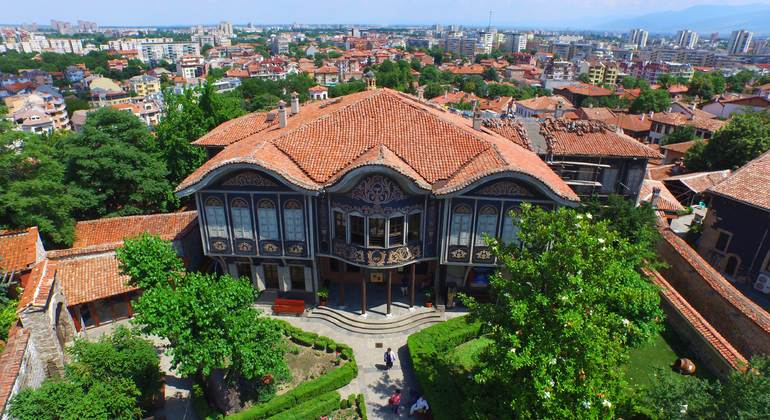
The Ethnographic Museum
Even if you don’t have time to step inside, it would be criminal to leave Plovdiv’s old town without glancing into the courtyard of this stunning National Revival–era building. Well-manicured flower gardens surround a navy-blue mansion ornamented with golden filigree and topped with a distinctive peaked roof. There is more to admire inside, especially the upper floor’s sunshine-yellow walls and carved wooden ceiling hovering above displays of regional costumes.
The Kapana Creative District
The Kapana Creative District emerged only in the past decade as part of a plan to rescue a failing part of the central city by pedestrianizing the streets and opening the storefronts to small-scale, independent businesses. The result is probably better than anyone could have hoped for: the most authentic “alternative” urban district in Eastern Europe.
You’ll find a little bit of everything: artisanal coffees, craft beers, burger bars, cocktail bars, vinyl shops, vegan bakeries, dress designers, arts & crafts shops, and lots more. It’s blissfully free of the cheesy corpo-pubs, retail chains and fast-food outlets that have marred similar efforts in other cities, such as Bucharest’s less-than-successful attempt to revive its own historic center.
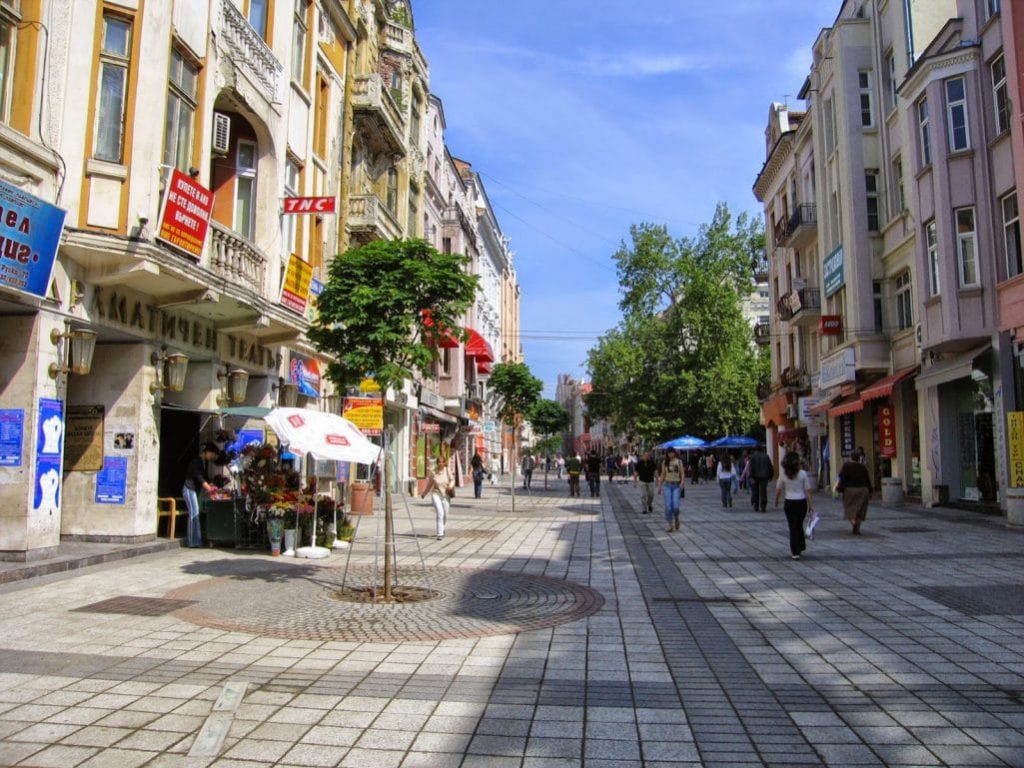
Main street
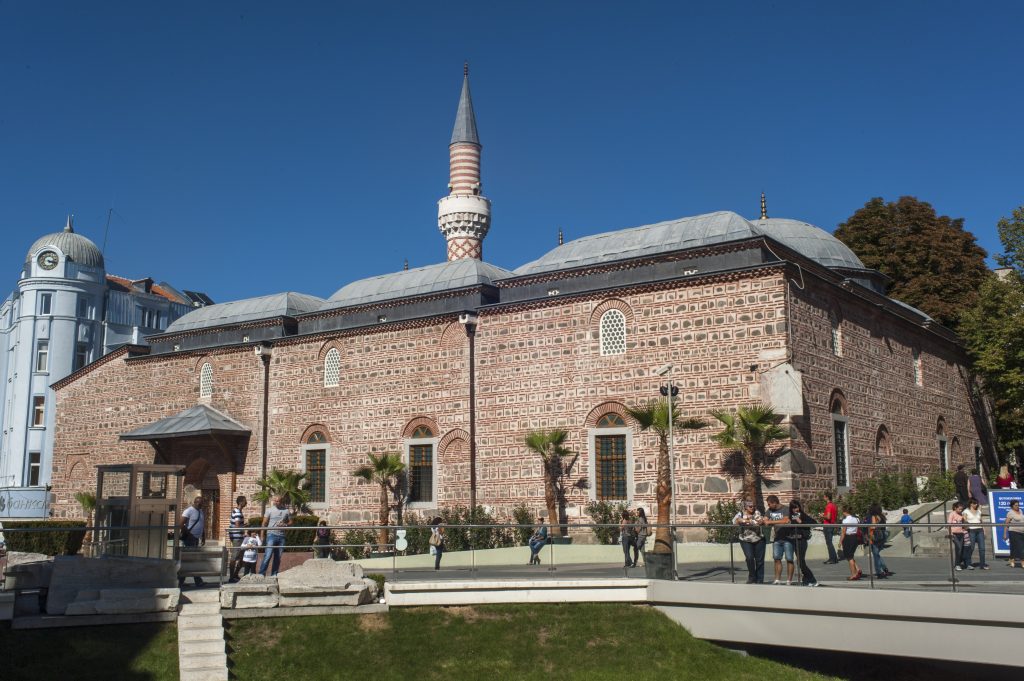
Djumaya Mosque
Bulgaria’s first working mosque, this unmissable Ottoman building in the middle of Plovdiv’s pedestrianised shopping zone was originally built in 1364. It was demolished and rebuilt in the mid-15th century. It is possible to enter (dress modestly), though the interior doesn’t match up to the mosque’s grand history and imposing 23m minaret.